


Texas Staircase Building Codes: A Practical Guide for Contractors and Homeowners 2026
When you consider installing a new staircase or replacing an old one in Texas, the same rulebook always crops up: the International Residential Code (IRC). Most Texas cities — including Austin, Dallas, Houston and San Antonio — adopt a version of the IRC as their residential building code. No one would call it light reading, but the core requirements are more straightforward than they first appear.
Read More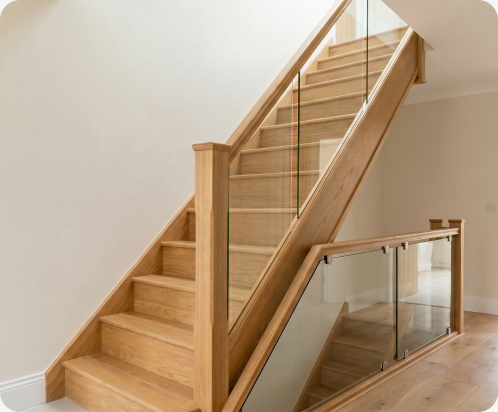
Staircase Handrail Height in Texas: Legal Requirements and Installation Guide
The required handrail height for a residential staircase in Texas is between 34 and 38 inches, measured vertically from the stair nosing line to the top of the rail. This requirement comes from the International Residential Code (IRC), which is adopted by most Texas municipalities. Guards on open-sided landings must be at least 36 inches high in residential buildings.
Read More
US Stair Codes: Complete Technical Guide for Professionals
US stair codes are the framework that governs how every staircase in Texas must be designed, constructed and installed. The primary instruments are the International Residential Code (IRC) for one- and two-family dwellings and the International Building Code (IBC) for commercial and multi-family buildings, both published by the International Code Council and adopted with local amendments by Texas jurisdictions.
Read More
Floating Staircase Design and Engineering: A Complete Guide
A floating staircase is one of the most requested design features in modern US residential interiors. The apparent weightlessness of treads that seem to hang in space has made them a signature of contemporary luxury design. This guide covers the key design decisions, material choices and engineering principles behind a successful installation.
Read More
Bespoke vs Modular Staircases: Which Is Right for Your Project?
Choosing between a fully bespoke staircase and a modular staircase system depends on your budget, timeline, and design ambitions. Both approaches can produce outstanding results — the right choice depends on the specific requirements of your project.
Read More